
A property gives back a great deal over the years. It shelters the household through storms and heat waves, hosts celebrations and quiet evenings, and steadily builds equity for its owners. All of that service comes at a cost in wear. Moving parts loosen, outdoor structures weather, landscaping matures and ages, and the materials that make up the shell and interior slowly lose their edge. A home that has carried its owners well for a decade or more has earned more than occasional fixes. It has earned a deliberate plan of upgrades and upkeep that matches the work it does.
That plan works best when it balances two goals. Upkeep restores what daily use and weather have worn down, keeping systems safe and surfaces sound. Upgrades replace tired components with better materials and smarter designs that perform longer and ask for less attention. Together, they extend the life of the structure, lower operating costs, and make the property more enjoyable to live in. Owners who give their homes this kind of steady attention rarely face the cascade of failures that follows years of neglect, and they enjoy a property that continues to reward them long into the future.
Straightening Bent Tracks and Replacing Snapped Springs
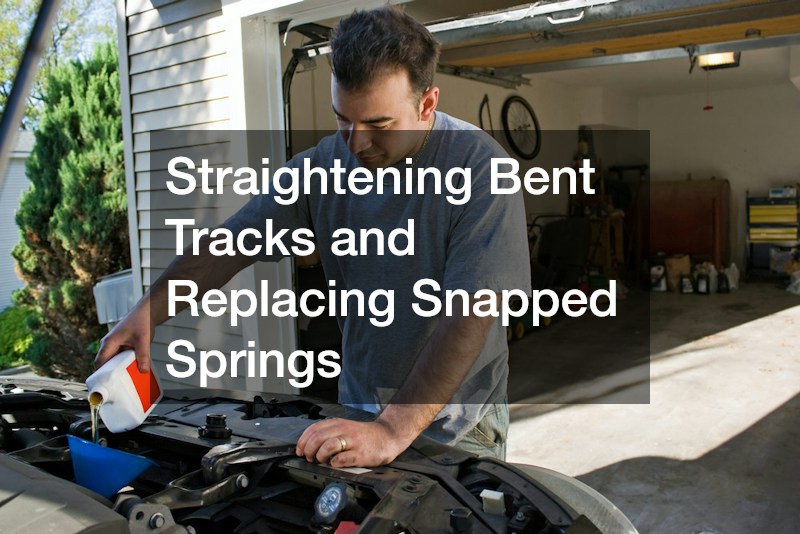
Large overhead panels operate under tremendous tension, and their components wear with every cycle. Tracks bent by a bumper, a misaligned bracket, or a loose fastener cause rollers to bind, making the panel shudder, scrape, or jump out of alignment. Torsion springs are rated for a limited number of cycles, and when one finally fails, it often snaps with a loud bang that leaves the panel too heavy for the opener to lift. Attempting to force a panel with a broken spring can damage the opener, cables, and drums, and the stored energy in these systems makes do-it-yourself repairs dangerous.
Professional garage door repair begins with securing the panel and inspecting tracks, rollers, hinges, cables, drums, and springs. Bent track sections are straightened or replaced, and brackets are tightened or reinforced so tracks stay plumb and parallel. Snapped springs are replaced in matched pairs sized to the panel’s weight and height, then wound to the correct number of turns with proper winding bars. Worn cables and rollers are replaced, moving parts are lubricated, and balance, safety sensors, and auto-reverse settings are tested before the opener is reconnected.
Felling Storm-Weakened Trunks and Clearing Fallen Limbs
Severe storms leave behind damage that is not always obvious from the ground. Trunks can crack internally, roots can loosen in saturated soil, and large limbs can hang suspended in the canopy, ready to drop without warning. Partially uprooted specimens shift as soil dries and settles, while split unions widen with each gust. Fallen limbs scattered across the yard block driveways and walkways, crush landscaping, and conceal hazards such as downed lines.
Experienced local tree removal crews begin with an assessment of trunk cracks, root plate movement, hanging limbs, and nearby targets, coordinating with utilities when lines are involved. Hanging limbs are lowered with ropes rather than dropped, and damaged trunks are dismantled in sections using rigging or cranes to avoid striking the house. Fallen limbs are cut, chipped, and hauled away, stumps are ground below grade, and remaining specimens are checked for hidden damage that could create new risks.
Blocking Rodent Pathways and Treating Insect Harborages
Rodents and insects follow predictable routes into a home. Mice and rats travel along foundation walls, fence lines, and utility lines, slipping through gaps around pipes, vents, soffits, and worn door sweeps. Once inside, they nest in attics, wall voids, and crawlspaces, chewing wiring and contaminating insulation. Insects such as roaches, silverfish, and spiders settle into harborages where moisture, warmth, and food combine, including the gaps behind appliances, beneath sinks, and inside cluttered storage areas.
A reliable local pest control company begins with an inspection that maps rodent runways, entry points, and insect harborages using droppings, rub marks, and moisture readings. Gaps are sealed with steel mesh, copper wool, metal flashing, and durable sealants, while vents and soffits receive heavy-gauge screening. Traps and secured bait stations reduce active rodent populations, and insect harborages are treated with targeted gel baits, dusts, and growth regulators. Regular follow-up visits and moisture corrections keep new activity from taking hold. Trimming shrubs back from siding, storing firewood away from the house, and keeping food sealed in tight containers remove the conditions that drew pests in.
Preparing Compacted Subbases and Seaming Synthetic Grass

Synthetic surfaces are only as good as the ground beneath them. When installers skip excavation or use inadequate base material, the finished surface develops dips, ripples, and soft spots that collect water and wear unevenly. Poor drainage leaves puddles and odors, especially in pet areas, and visible seams detract from the natural look. Edges that are not properly secured can lift and curl, creating tripping hazards and allowing weeds to grow through.
Quality artificial turf starts with excavating three to four inches of native soil, laying geotextile fabric, and installing a crushed aggregate base compacted with a vibratory plate and graded for drainage. A finer top layer creates a smooth surface. Panels are laid with fibers running in the same direction, seams are joined with seaming tape and outdoor adhesive, and edges are secured with galvanized nails or a perimeter board. Infill such as silica sand or coated granules supports the fibers, adds cushioning, and helps the surface drain. Antimicrobial infill and a perforated backing are recommended for pet areas, allowing urine to drain quickly and keeping odors under control.
Pulling Rotted Posts and Installing Durable New Panels
Wooden perimeter structures age from the ground up. Posts set directly in soil or in concrete collars that trap water rot at grade, loosening their grip until entire sections lean. Rails split, fasteners rust, and pickets warp, crack, and fade under years of sun and rain. Gates sag and drag, latches stop catching, and the structure no longer provides privacy, security, or safe containment for pets and children.
A complete fence replacement begins with pulling old posts along with their concrete footings, then marking a new layout and checking for underground utilities. New posts of ground-contact rated lumber, galvanized steel, or aluminum are set in holes dug at least one-third their length or below the frost line, backfilled with gravel and concrete crowned to shed water. Durable panels of cedar, vinyl, composite, or powder-coated metal are attached with stainless steel or hot-dip galvanized fasteners, and gates are hung with heavy-duty hinges and anti-sag hardware. A penetrating stain or factory finish protects wood components from UV damage and moisture between periodic recoats.
Servicing Aging Condensers and Upgrading Comfort Controls
Cooling equipment that has run for many summers develops a list of small problems. Condenser coils collect dirt and debris, capacitors weaken, contactors pit, and fan motor bearings wear. Refrigerant may leak slowly through corroded coils or fittings. Older thermostats with mercury switches or simple programming offer limited control, causing the system to run longer than necessary and leaving rooms too hot, too cold, or too humid.
A trusted ac company services aging condensers by cleaning coils, straightening fins, testing capacitors and contactors, measuring motor amperage, and verifying refrigerant charge with superheat and subcooling readings. Drain lines are flushed, and electrical connections are tightened. Comfort controls are upgraded with smart or programmable thermostats that support multi-stage equipment, humidity control, and remote access, allowing schedules that balance comfort with efficiency. When repairs become frequent, technicians can help homeowners plan a timely, properly sized replacement.
Repairing Cracked Coping and Upgrading Filtration Equipment

The coping that caps the edge of a swimming basin takes constant abuse from sun, freeze-thaw cycles, chemical exposure, and foot traffic. Cracked or loose coping lets water seep behind the bond beam, loosening tile, cracking the deck joint, and weakening the shell. Meanwhile, filtration equipment loses efficiency over time. Pumps run hot and noisy, filters clog or develop torn grids, and outdated single-speed motors consume large amounts of electricity.
A dependable pool contractor removes loose or damaged coping, chips out failed mortar, and resets the stones in fresh mortar, then seals the joint between coping and deck with flexible expansion sealant. Damaged waterline tile is reset or replaced. Filtration systems are upgraded with variable-speed pumps that cut energy use dramatically, along with properly sized cartridge, sand, or DE filters. Updated automation, check valves, and pressure gauges help the system run efficiently and keep water clear. Balanced water chemistry then protects the new mortar joints, tile, and equipment seals from premature wear.
Opening Closed Floor Plans and Reinforcing Load Paths
Many older homes divide living spaces into small, separate rooms that block light, limit circulation, and make gatherings feel cramped. Opening these spaces is a popular upgrade, but interior walls often carry loads from floors and ceilings above. Removing a bearing wall without proper support can cause sagging floors, cracked drywall, and doors that stick or no longer latch, while undersized beams can deflect over time.
Experienced remodeling contractors work with structural engineers to identify bearing walls and design replacement beams that carry loads safely. Temporary shoring supports the structure while the wall is removed, and engineered LVL or steel beams are installed on properly sized posts that transfer loads down through blocking to footings or foundation walls. Ductwork, plumbing, and wiring are rerouted, flooring and ceilings are patched, and inspections confirm the new open plan is structurally sound. Updated lighting and outlets are placed for the new layout then make the larger space as practical as it is attractive.
Fabricating Quartz Work Surfaces and Sealing Natural Stone
Surfaces in cooking and wet areas handle heavy daily use. Laminate swells at seams and around sinks, tile grout stains and cracks, and natural stone that has not been sealed absorbs oils, wine, and coffee, leaving permanent stains. Acidic foods etch marble, and unsupported overhangs or poorly placed seams can crack under weight. These problems make spaces look worn and harder to keep clean.
Durable countertops begin with precise digital templating, followed by fabrication from quartz, granite, or other natural stone with CNC equipment for accurate cutouts and edges. Seams are placed over solid support and bonded with color-matched epoxy, while overhangs receive concealed steel brackets. Engineered quartz is nonporous and requires no sealing, while natural stone receives an impregnating sealer that should be renewed whenever water stops beading on the surface. Undermount sinks are anchored with clips and adhesive and sealed with silicone.
Fitting Seamless Channels and Extending Downspout Outlets
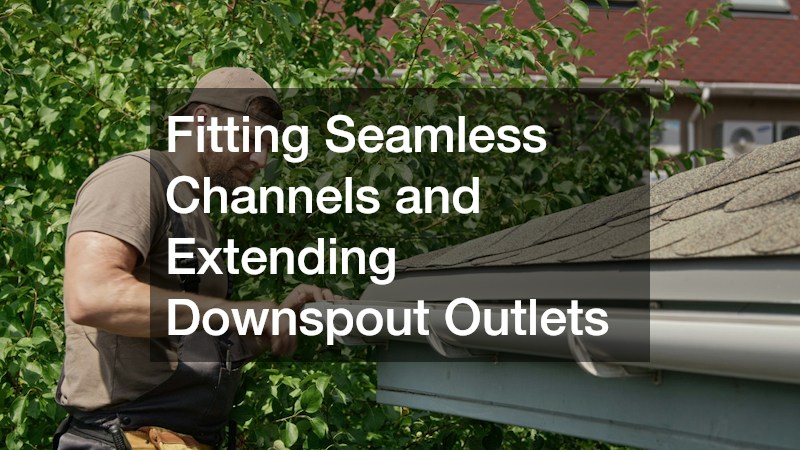
Rain collection systems with seams leak at every joint as sealant breaks down. Short downspouts dump concentrated water beside the foundation, where it erodes soil, saturates crawlspaces, and causes basement leaks. Channels that are too small overflow during heavy storms, and poorly pitched runs hold standing water that rots fascia boards and attracts mosquitoes.
Professional gutter installation uses seamless aluminum roll-formed on site to fit each run exactly, eliminating joints where leaks typically begin. Channels are sized to the roof area and local rainfall intensity, mounted with hidden hangers screwed into rafter tails, and pitched toward outlets. Downspouts are extended with rigid extensions, splash blocks, or buried PVC lines that carry water several feet from the foundation to pop-up emitters, dry wells, or rain gardens. Micro-mesh guards and twice-yearly cleaning keep the new system flowing freely through leaf season and heavy spring storms.
A property that receives steady upgrades and upkeep returns the favor in comfort, safety, and value. Smoothly operating overhead entries, safe landscapes, sealed shells, durable outdoor surfaces, and sturdy perimeter structures protect the household and the investment. Inside, open layouts, efficient cooling, and resilient work surfaces make daily life easier. When any of these elements is neglected, wear accelerates and the effects spread to surrounding systems.
The most effective strategy treats maintenance and improvement as an ongoing process. Seasonal inspections of moving parts, perimeter structures, and outdoor surfaces, routine cooling and filtration service, regular insect monitoring, and periodic checks after storms catch problems early. Upgrades such as variable-speed pumps, smart controls, seamless rain collection, and durable materials reduce future maintenance while improving performance.
The reward is a home that continues to serve its owners well for years to come. Systems run efficiently, outdoor spaces stay inviting, rooms remain functional and attractive, and the structure holds its value. By giving the property the attention it has earned, homeowners enjoy greater comfort today and stronger returns tomorrow.
